Customised & fully printed from 500 pieces•Certified, sustainable materials•Production & delivery from 5 working days
PPWR: Associated Packaging Obligations
The new EU Packaging Regulation (PPWR) introduces new obligations for anyone placing packaging on the market in the EU. Here you can find out what will be important from 12 August 2026, what you – as a so-called manufacturer – need to bear in mind, and how we at Packiro can support you with the relevant technical information.
From 12 August
New packaging requirements for producers and brand owners
Valid throughout the EU
Opt for packaging Made in Europe
PFAS limits
New limits for food packaging
Packiro is here to help you
We will provide the necessary documents
Packaging requirements under the PPWR
Here's what this means for you and your brand
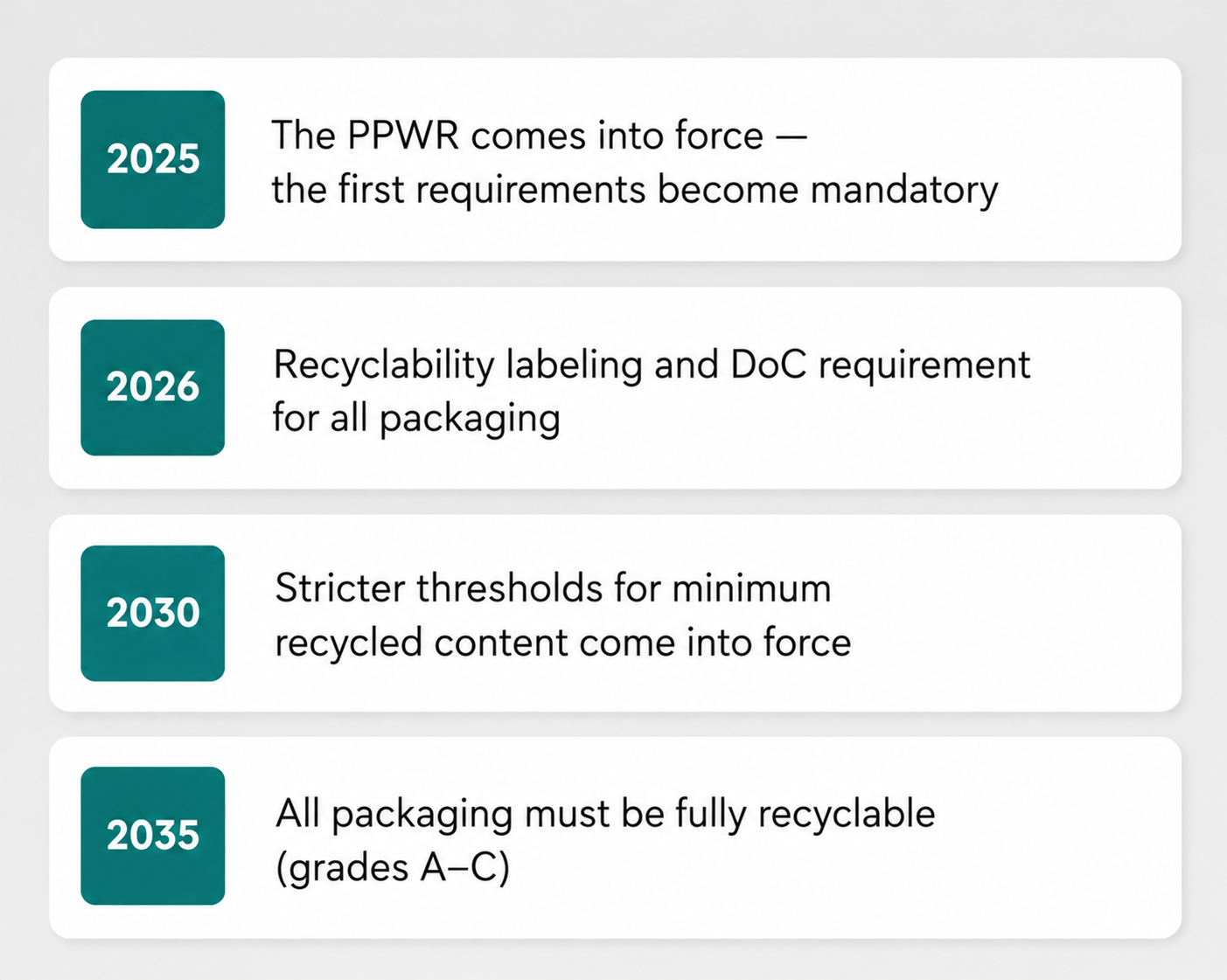
Packaging requirements from 12 August 2026
The PPWR (short for ‘Packaging & Packaging Waste Regulation’) is a binding EU packaging regulation that applies to all Member States. Over the next few years, various new requirements regarding packaging will come into force.
From 12 August 2026, the following obligations will apply to ‘producers’* of packaging:
Declaration of conformity with technical documentation
Obligation to label packaging
Obligation to issue a Declaration of Conformity
The PPWR requires manufacturers* to hold an EU Declaration of Conformity for each type of packaging – as proof that the packaging complies with the new sustainability requirements.
For each type of packaging (e.g. product and transport packaging), a separate Declaration of Conformity is required for each packaging material.
Input for your PPWR Declaration of Conformity
Download now to create your DoC
Create your own PPWR Declaration of Conformity
As our customer, we are providing you with the required packaging information so that you, as the manufacturer, can draw up the declaration of conformity. To do this, simply select the packaging material that you always order from us.
*Please note: This is not yet the final Declaration of Conformity! Your company details, information on food packaging and details regarding the handling of PFAS are still missing.
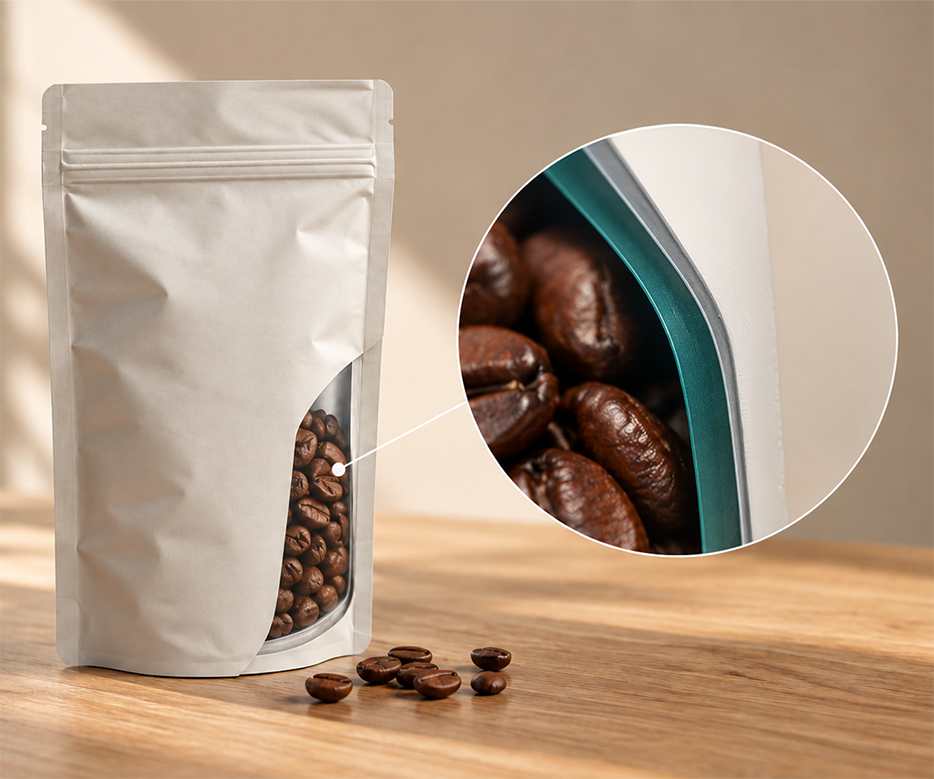
PFAS limits for food packaging
PFAS are man-made chemicals that barely break down in the environment, which is why they are also known as ‘forever chemicals’. Since 12 August 2026, the PPWR has set limits for packaging that comes into contact with food. If these limits are exceeded, the packaging may no longer be placed on the market in the EU.
The limits are 25 ppb for any single PFAS compound, 250 ppb for the sum of all detected PFAS and 50 ppm for total fluorine content. If the fluorine content is higher, it must be demonstrated whether the fluorine actually comes from PFAS.
As required by law, all Packiro packaging complies with these limits.
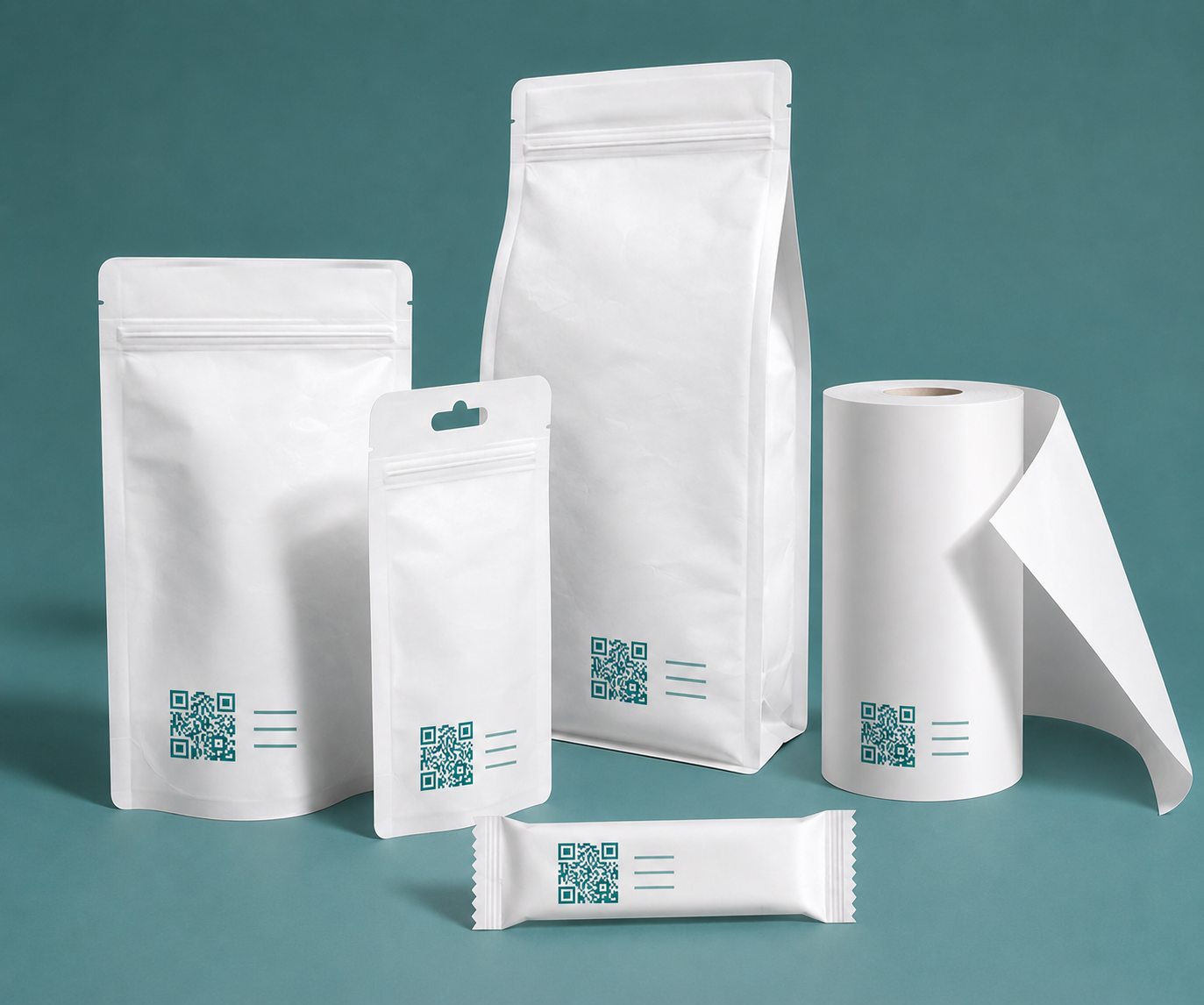
PPWR Labelling Requirements for Packaging
From 12 August 2026, your packaging must also carry certain details. As a manufacturer, you are responsible for ensuring that the following information appears on your packaging:
An identification mark, e.g. the batch or serial number of the packaging (you can find this in our document, 'Input for DoC PPWR', which is downloadable from this page)
Your name or brand
Your postal address
A means of electronic contact
This information can be included directly in your print design or incorporated via a QR code.
Coming soon...
…our PPWR services for you as a manufacturer!
We are currently working on a range of practical, digital solutions to provide you with the best possible support in meeting the new legal requirements under the PPWR. We’ll let you know as soon as they’re available!
FAQ
FAQ: PPWR Obligations for Producers
How does the PPWR affect UK packaging customers?
Yes — if you sell into the EU or Northern Ireland. The PPWR is an EU regulation, so it doesn't apply to sales purely within Great Britain (England, Scotland, Wales). But it does apply the moment your packaging reaches an EU customer or the Northern Ireland market.
What happens from 12 August 2026 if I export to the EU?
From that date, non-compliant packaging can be refused entry, withdrawn, or recalled from the EU or NI market — regardless of where it was manufactured. What's legal under UK packaging rules may not automatically satisfy the PPWR, so it's worth checking your packaging against both frameworks separately.
How long must the PPWR declaration of conformity be retained?
The retention period depends on the type of packaging: for single-use packaging it is 5 years, and for reusable packaging 10 years – in each case calculated from the date on which the packaging was first placed on the market.
Both the declaration of conformity itself and the underlying technical documentation must be retained so that they can be presented to the market surveillance authorities upon request.
When do I become a "manufacturer" under the PPWR?
If your brand is on the packaging and you place it on the EU or NI market, you're the manufacturer/producer under the PPWR. In that case, you are obligated to have a Declaration of Conformity per packaging type, product labelling with identification and contact details, and meet the compliance with substance limits.
You'll also specifically need to register as a manufacturer under the PPWR if you use DDP (Delivered Duty Paid) shipping terms, making you the importer of record in the EU, or if you sell directly to EU end customers rather than through an EU-based business.
Do I need a new declaration of conformity as soon as I modify/change my packaging?
Yes. The Declaration of Conformity is not a one-off, static document – it must be updated as soon as the product (the packaging) or the underlying legal requirements change.
As the declaration always refers to a specific, clearly identifiable package or a particular type of packaging, a new DoC is required for any change that may affect conformity. This could be the use of a different material or a change to a different packaging format.
However, if you change your print design, you generally do not need a new Declaration of Conformity.
Does the EU set out specific requirements under the PPWR for how packaging labelling must look – for example, a minimum font size?
Article 12 of the PPWR (Regulation (EU) 2025/40) already sets out which information packaging must carry, but not yet technical details such as font size or pictogram dimensions. Since 12 August 2026, every piece of packaging must carry an identification feature (e.g. a batch or serial number) along with the manufacturer's name/brand, postal address and contact details – in every language of the markets where the products are sold. This information must be permanently affixed, clearly visible and not easily removable.
From 12 August 2028 at the latest, an EU-wide, harmonised, pictogram-based label for material composition will be added, which must also be understandable for people with disabilities. The exact technical specifications for this – such as size, colours or minimum dimensions – will only be set out by the European Commission in separate implementing acts, expected to be published in 2026/2027.
What are the threshold values for PFAS that will apply from 12 August 2026?
From 12 August 2026, food contact packaging may no longer be placed on the market if it contains or comes into contact with PFAS (per- and polyfluoroalkyl substances). Packaging not intended for use with food is not, for the time being, affected by the PFAS limit values.
PFAS are classified as ‘forever chemicals’ and hardly degrade naturally at all. They are therefore considered harmful to the environment, as well as to human health.
The following limit values apply:
25 ppb for a single PFAS compound
250 ppb for the sum of all detected PFAS compounds
50 ppm for the total fluorine content of the packaging
If the total fluorine content exceeds 50 ppm, further evidence must be provided as to the origin of the fluorine – in other words, whether it is actually PFAS or a harmless source of fluorine.